 NEWS
NEWS
Choosing the Right Lighting Fixtures for Your Event
Choosing the right lighting fixtures starts long before a gear list is built. Successful lighting designs balance creative intent, venue realities, technical constraints and audience needs. Whether you are lighting a corporate meeting, a live performance or a broadcast-ready event, understanding how different fixture types function will help you make informed decisions.
Start With the Event Requirements
Lighting design begins with context. Before any fixture is specified, designers need a clear understanding of the event’s purpose and environment.
Key questions include:
-
-
- What is the size of the room and the stage?
- What is the ceiling or trim height?
- Can lighting be flown, or must it be ground supported?
- Is the event designed for a live audience, camera or both?
-
Venue constraints and viewing requirements often shape fixture selection more than creative intent. Ceiling height and throw distance determine fixture scale and output, while camera involvement introduces considerations such as color consistency, glare and lens flare. Lighting that looks effective in the room does not always translate well on camera, so these factors need to be addressed early in the planning process.
Static vs. Moving Lights
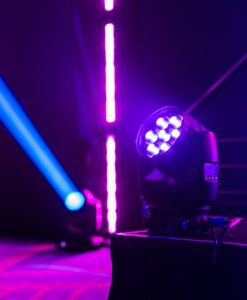
One of the first decisions in any lighting design is whether to rely more heavily on static fixtures or moving lights. Each has clear advantages and trade-offs.
Static fixtures excel when precision and repeatability matter. They are often easier to focus accurately and are well suited for key lighting and architectural applications where consistency is critical.
Moving lights offer speed, flexibility and creative range. They allow designers to change focus, color and texture quickly without refocusing fixtures manually. However, they introduce mechanical complexity and depend heavily on programming time and operator experience.
In many cases, the choice comes down to available time, crew size and comfort level with the fixtures rather than aesthetics alone.
Understanding Common Lighting Fixture Types
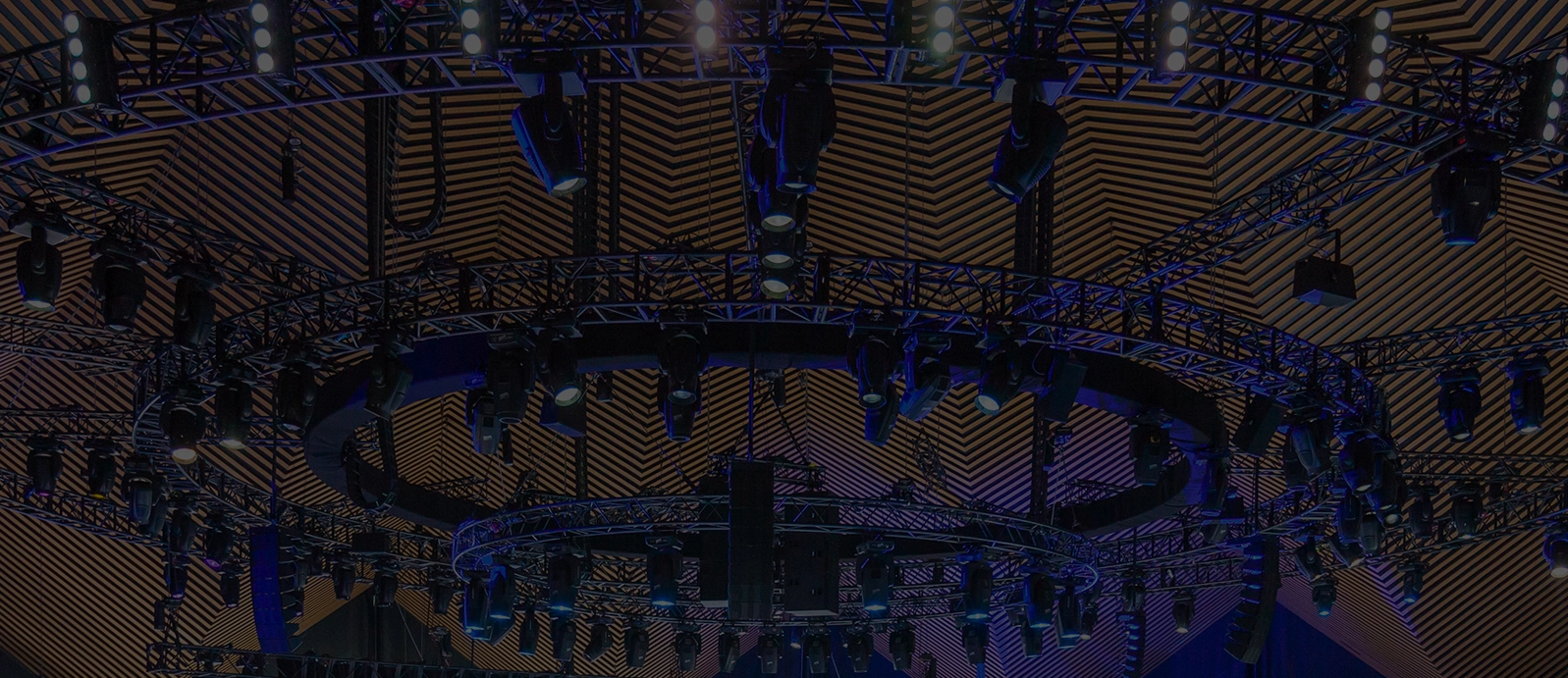
Most lighting rigs rely on a combination of core fixture categories, each serving a specific purpose. Understanding these roles makes it easier to build a balanced lighting package.
-
-
- Wash fixtures: Provide broad, even coverage across a stage or space. They form the foundation of most lighting designs and are commonly used for base illumination and color.
- Beam fixtures: Deliver narrow, high-intensity beams for visual impact. These fixtures add movement, punch and energy, especially in larger spaces.
- Profile and spot fixtures: Offer precision and control. They support gobos, framing shutters and tighter focus, making them ideal for layering light and shaping beams around scenic elements.
- Strip lights, PARs, and uplighting fixtures: Support architectural and decorative lighting. They add color and dimension to walls, columns, and vertical surfaces rather than serving as primary illumination.
-
Some fixtures attempt to combine multiple functions into a single unit, often referred to as hybrid fixtures. While they can reduce fixture count and save space, they typically involve performance compromises and are most effective when expectations, budget and programming skills are aligned.
Common Misconceptions and Pitfalls
Several issues appear repeatedly across events and can often be avoided with proper planning:
-
-
-
- Selecting fixtures that perform well live but fall short on camera
- Underestimating programming time, especially with unfamiliar fixtures
- Choosing fixtures that are undersized or oversized for the venue
- Using equipment outside its intended environment, such as indoor fixtures outdoors
-
-
Addressing these challenges early helps ensure the lighting design supports both the creative vision and the practical realities of the event.
Choosing the Right Tool for the Job
There is no single best lighting fixture for any event. The right solution depends on goals, space, budget and experience level. Successful lighting designs prioritize function first, then creativity.
Working with experienced professionals and choosing fixtures that align with real-world constraints leads to better results on stage, on camera, and for the audience. Explore our curated lighting selection to learn more about different fixture types and start building a lighting package for your next event. If you have questions or need guidance, our product experts are available to help you make informed decisions.