 NEWS
NEWS
What Crew Do You Need to Build an LED Wall?
LED walls deliver immersive visuals and flexible stage designs, but their success relies entirely on the technical crew behind the scenes. While many event producers understand the visual impact of LED, the specific staffing requirements are often less clear. Because these systems are a precise blend of physical labor and high-level engineering, choosing the right team is just as important as choosing the right gear.
The people behind the equipment make all the difference. Understanding how different roles function, from mapping and troubleshooting to system integration, will help you plan budgets, timelines and technical support more effectively.
Defining the Technical Scope
Crew planning begins long before the first case is rolled off the truck. Once you choose the perfect LED wall for your project, the technical requirements and labor needs become much clearer. Several factors influence the size and expertise of the team required for a successful installation.
The physical installation method is a primary driver of labor. Ground-supported walls require a deep understanding of leverage and ballast to ensure structural safety, while flown walls often require specialized technicians to work in tandem with certified riggers. Beyond the physical build, the complexity of the signal flow, such as integrating with media servers, broadcast switchers or live camera feeds, dictates the level of engineering expertise needed on site.
Time also plays a major role in staffing decisions. A tight load-in schedule often requires a higher ratio of skilled technicians to ensure the build stays on schedule. In high-pressure environments, having a crew that can work independently and troubleshoot in real-time is the best way to protect the production timeline.
Understanding LED Crew Roles
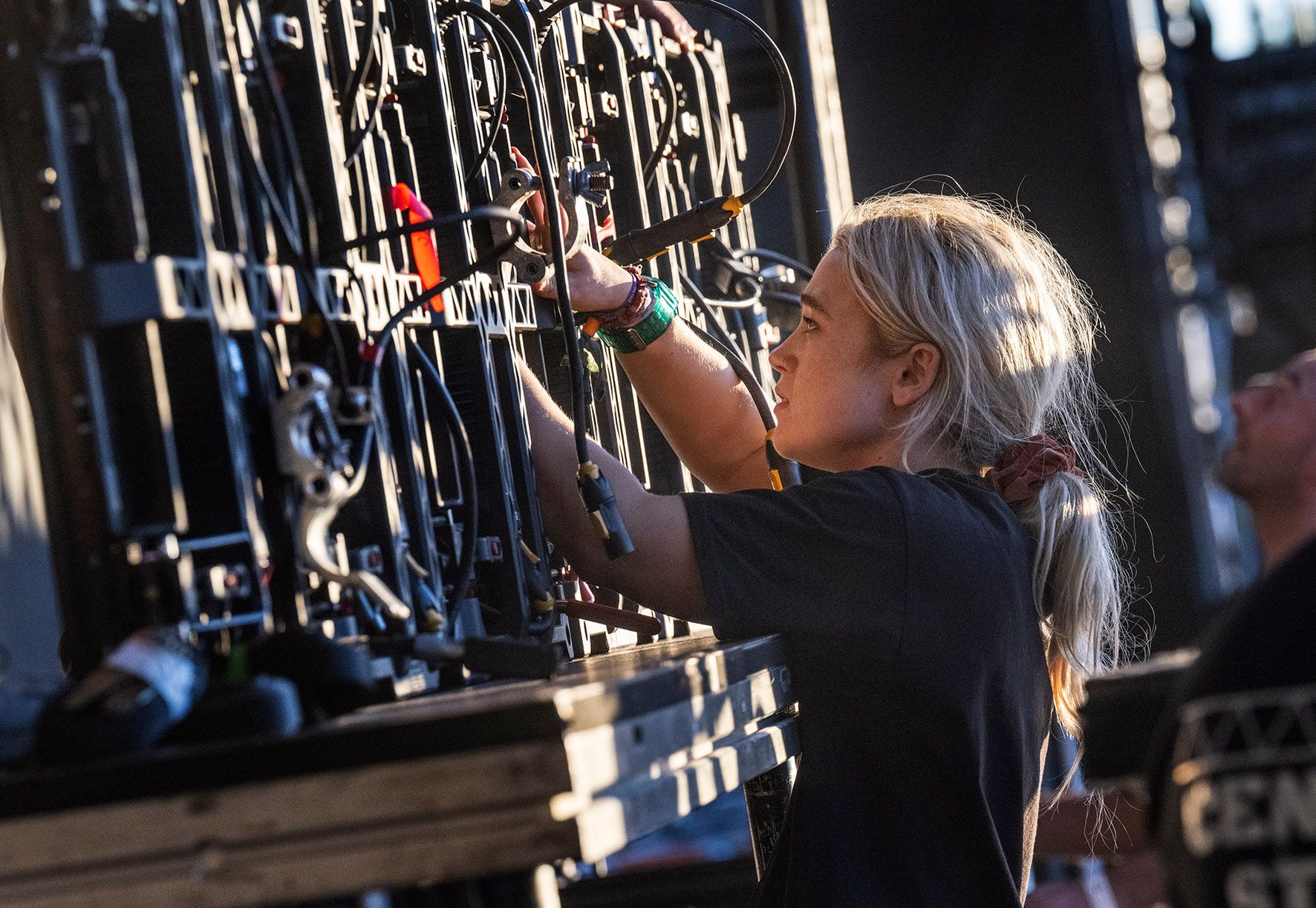
Professional LED installations usually involve a hierarchy of roles, each supporting a different part of the setup, mapping and system management process.
-
-
- LED Engineer: Often considered the “brain trust” of the department, the LED engineer is responsible for system architecture and high-level integration. This role builds processing racks, manages complex signal flow and ensures the LED wall syncs perfectly with other systems like media servers or broadcast recordings. They are essential for projects requiring technical color correction to match skin tones for cameras or complex multi-system networking.
- LED Lead (LED 1): The LED Lead is the primary technician responsible for the wall and the crew on site. They implement the client’s design and oversee the physical build. The LED Lead configures the processing system, which is often prepared by the Project Manager or LED Engineer. They also map the panels using hardware-specific processing software. On many standard engagements, a single LED Lead can manage the entire process from setup through strike, including troubleshooting and coordination with other departments.
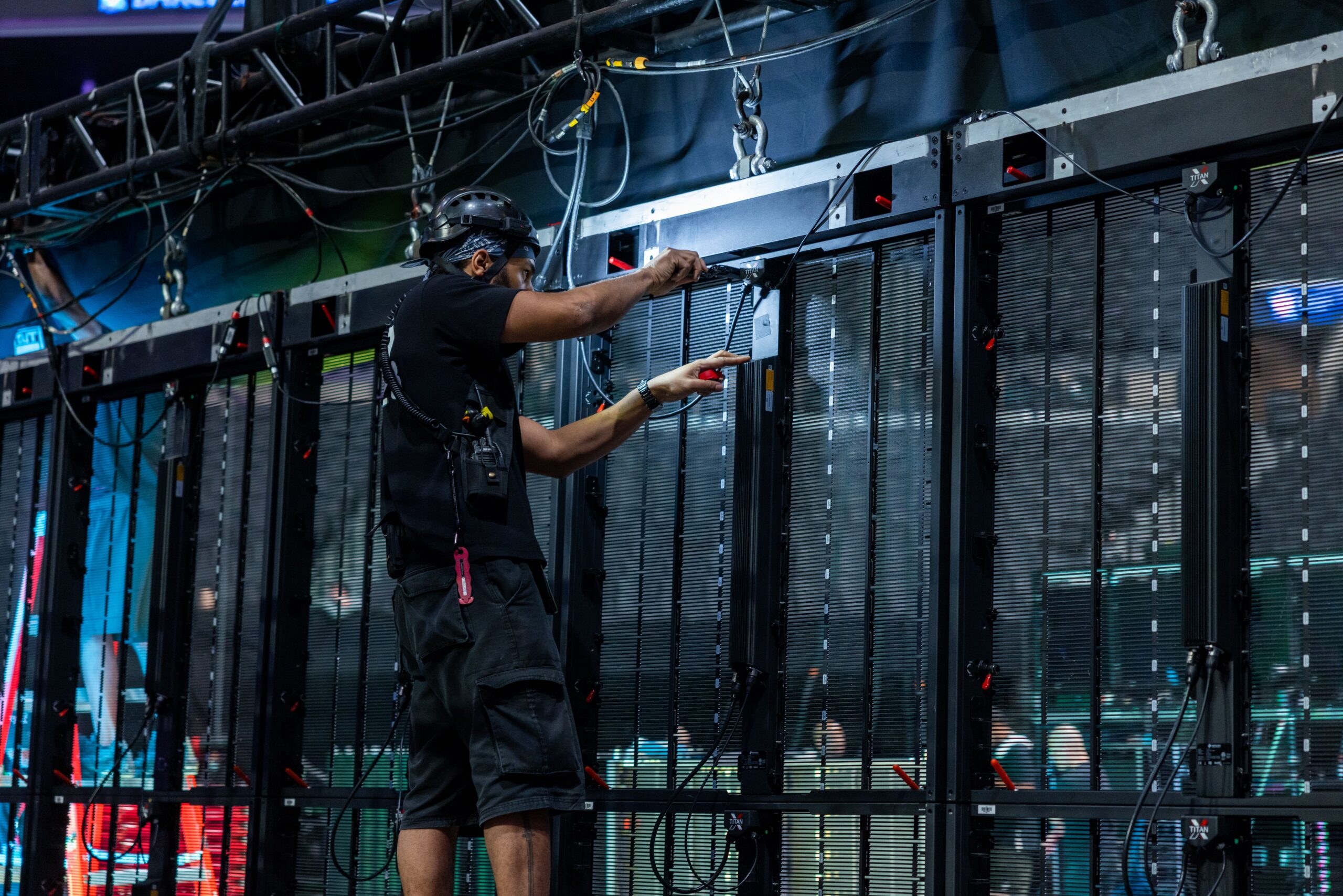
- LED Technician (LED 2 and LED 3): As installations grow in size, additional technicians are added to support the Lead. An LED 2 is a highly skilled technician who assists with panel assembly and technical troubleshooting, often handling tasks like climbing the wall to swap tiles while the Lead manages the processing. The LED 3 role focuses on utility and installation support, focusing on the physical assembly and cabling. These technicians are more skilled than general labor because they understand the equipment and can work under minimal supervision. Additional suitable LED Technicians will scale with job size and complexity. As the scale increases and more gear is added, more LED 2 and 3 technicians will be needed.
-
Finding the Right Labor Balance
It is common to utilize local stagehands to assist with the heavy lifting of an LED installation. They are vital for moving flight cases, managing cables, and supporting general assembly tasks. However, it’s important to distinguish between general labor and technical expertise.
While stagehands provide the muscle, only trained LED technicians should handle technical configurations like mapping, color calibration and signal routing. A common rule of thumb for a standard high-quality setup, such as a large main wall with two side I-Mag screens, is a competently skilled, three-person technical crew. This allows one person to manage the mapping, one to handle the physical troubleshooting on the wall and one to manage the flow of gear and cabling.
Relying too heavily on unskilled labor in a time-constrained environment can create bottlenecks. A tech-heavy approach ensures that if a problem arises during a time sensitive build, you have enough qualified eyes on the system to solve it without delaying the show.
Safety and Specialized Requirements
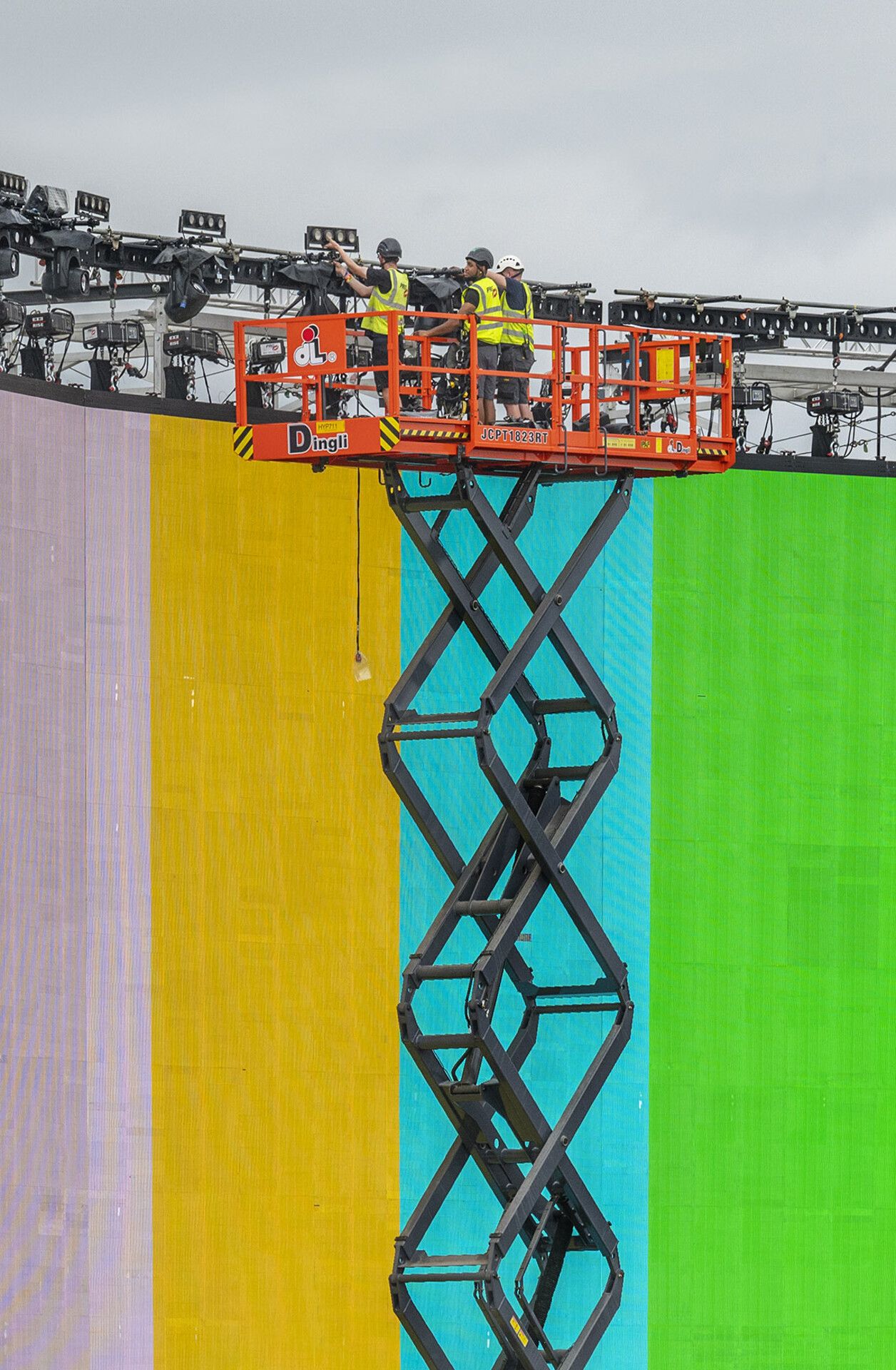 For large-scale productions or outdoor environments, specialized roles may be required to ensure safety and efficiency. Outdoor LED walls often require more than just a standard crew. They may need a third-party engineering report to provide stamped approval for wind ratings and ballast safety.
On massive tours or complex stadium builds, you may also see Rigging LED Technicians, who oversee pre-rigging motors and headers. These specialists focus entirely on the motors and headers, ensuring the structural foundation is ready so the build crew can efficiently hang panels immediately upon arrival.
Ultimately, the right crew protects both the production schedule and the final visual experience. By aligning your team’s expertise with the technical scope of your design, you ensure a smooth installation and a pixel-perfect event.